The Oxen of the God I Believe In: Mehmet Resul Kaçar
Past exhibition
Overview

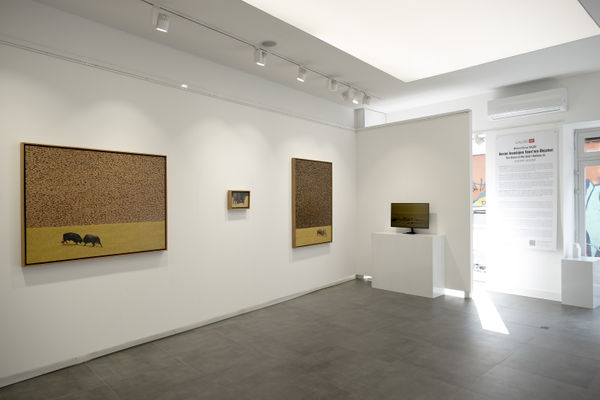
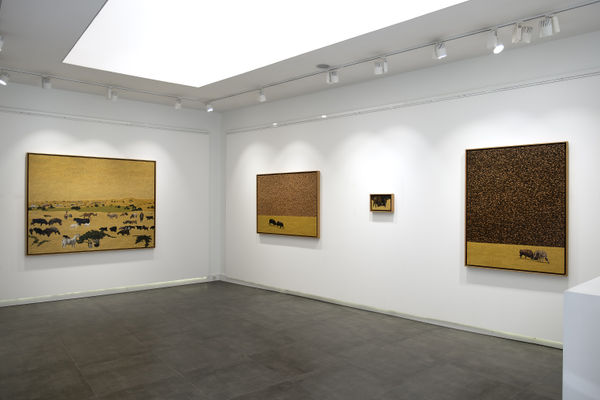
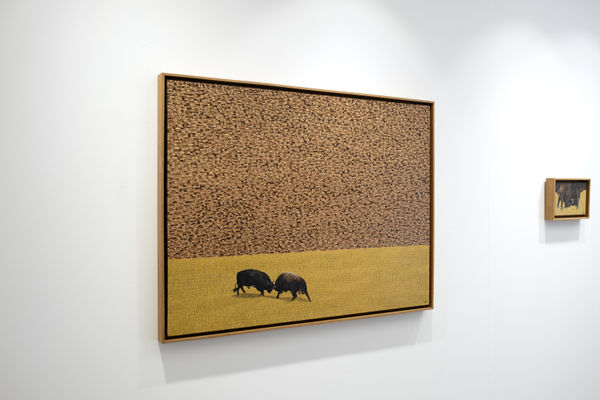
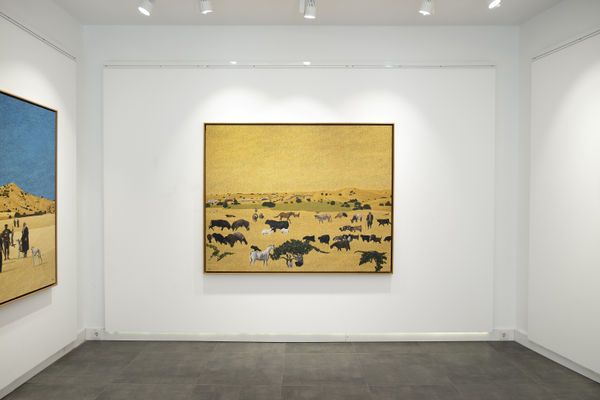
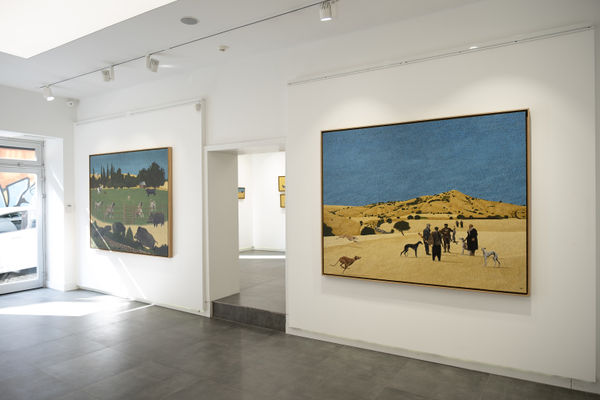
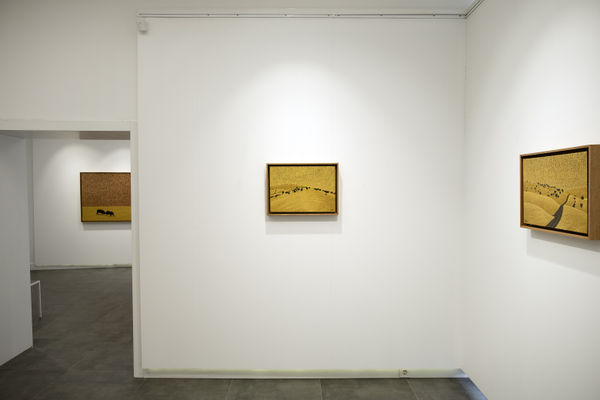
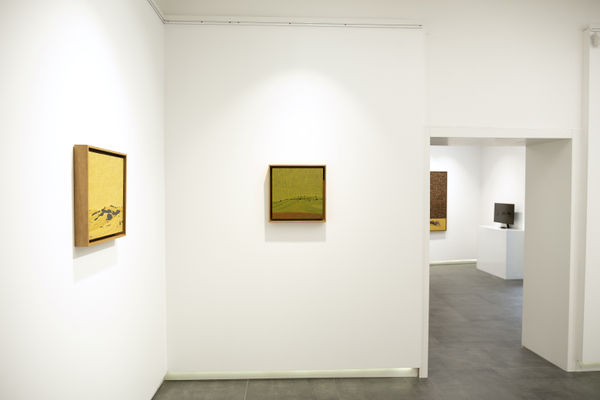
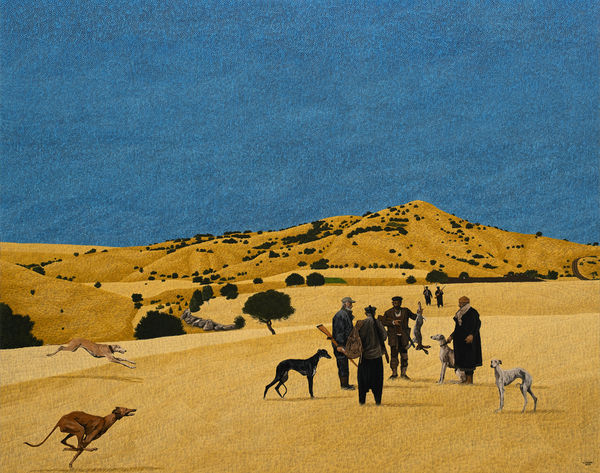
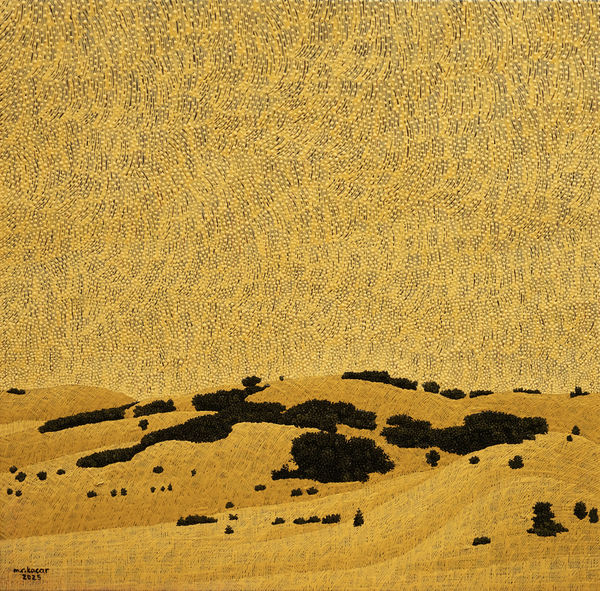
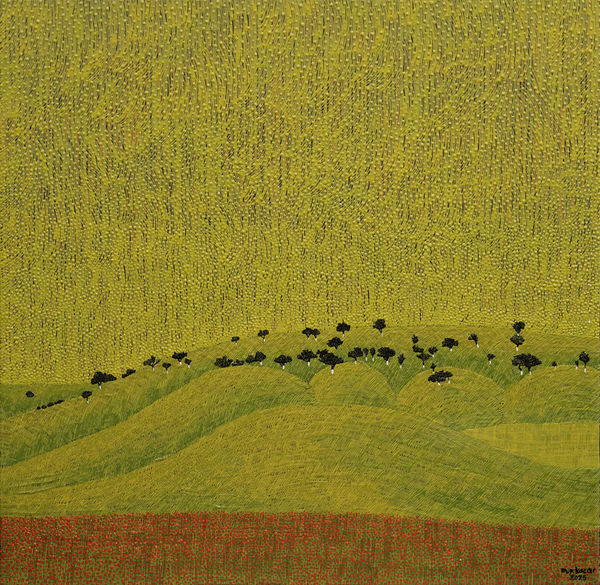
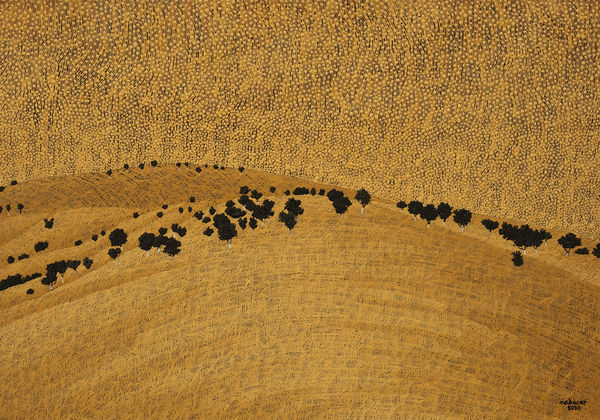
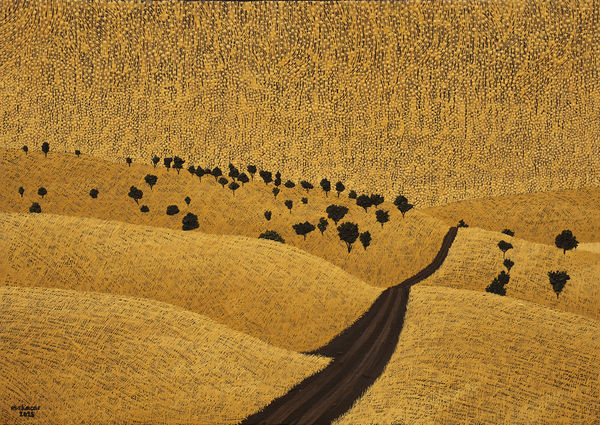
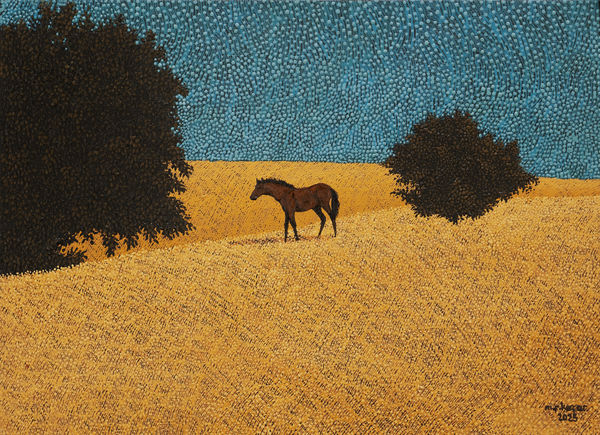
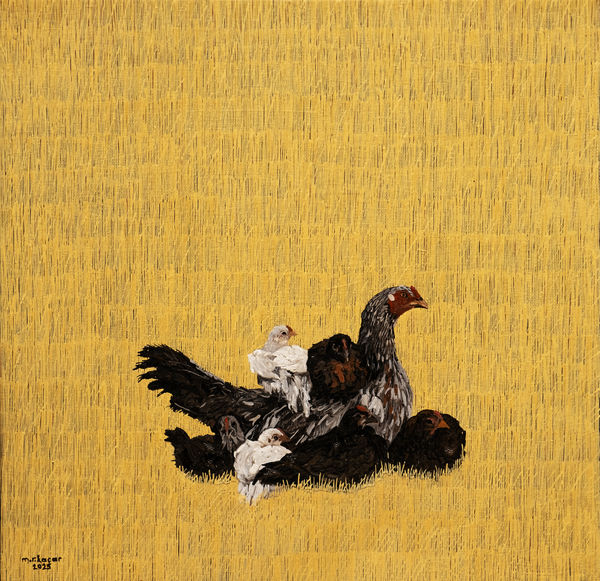
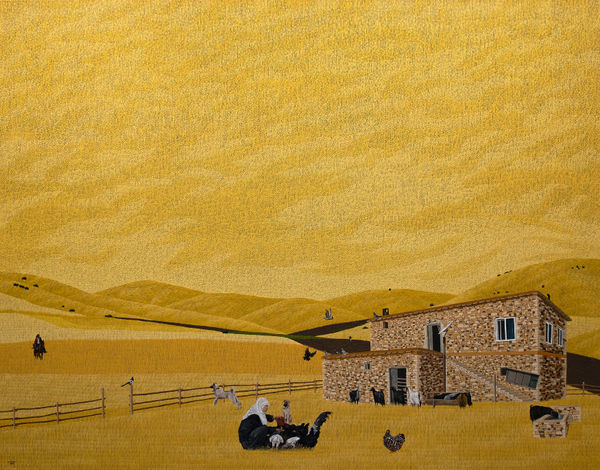
Mehmet Resul Kaçar’s artistic practice does not take shape around isolated themes but unfolds within an integrated field formed by interwoven experiences. The nature of the geography in which he was raised, animals, stories distilled from everyday life, and childhood memories emerge in his paintings as recurring images. His works are characterized by vast steppe landscapes dominated by every shade of yellow and by the scanning and stippling technique that has become a distinctive expressive language of his own.
The artist defines the source of these images through notions of roots, formative values, and a sense of longing. The landscapes that appear in his paintings are traces of the crowded, carnival-like life that once animated his childhood; the animal figures, beyond being natural elements of that life, function as carriers of love, labor, and burden. In his recent works, these images take form as simplified landscapes, figurative scenes, and compositions grounded in directly lived narratives.
The village imagery that becomes visible in Kaçar’s paintings reflects not a seamless sense of belonging but the fracture produced by leaving the geography in which he grew up and relocating to Istanbul. The landscapes depicted today point to a terrain suspended between what has been lived and what now survives only in memory. For this reason, Kaçar’s paintings are best read not as nostalgic recollections but as visual counterparts to a displaced experience seeking a distant yet persistent reconnection with its roots.
Within this framework, The Oxen of the God I Believe In refers to a system of values shaped by the geography in which the artist was raised, the stories he listened to, and the ethical principles he carries with him. The works in the exhibition do not ask what it means to belong to a specific geography; rather, they invite reflection on how that geography shapes the individual. Without romanticizing longing, dramatizing loss, or idealizing nature, Kaçar proposes a field of vision in which memory, space, and values are reconstituted from the standpoint of the present.
Works
-
 Mehmet Resul Kaçar, Ve Dalga Geçercesine Laflar Atıyordu / And He Taunted Them with His Words, 2024
 -
Mehmet Resul Kaçar, Heda, 2025
-
Mehmet Resul Kaçar, SORDAR, 2025
-
Mehmet Resul Kaçar, Ve avlanan tavşanın kulağı deliktir / And the Ears of the Hunted Rabbit Were Pierced, 2024


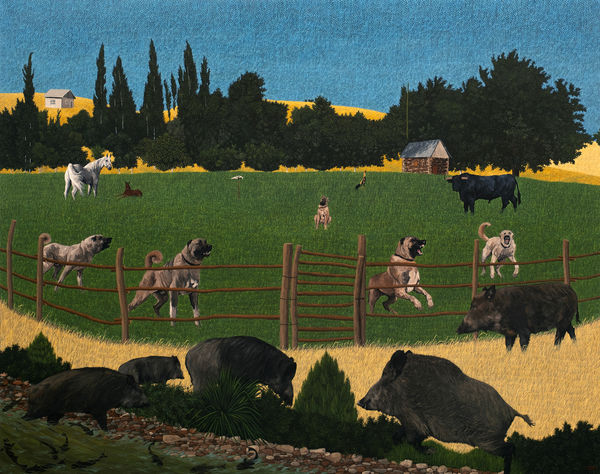
-
Mehmet Resul Kaçar, Ve Ben Kankole Üzümleri Yiyordum / And I Was Eating Kankole Grapes, 2025
-
Mehmet Resul Kaçar, Boğa Güreşi II / Bullfighting II, 2025
-
Mehmet Resul Kaçar, Boğa Güreşi / Bullfighting, 2025
-
Mehmet Resul Kaçar, Boğa Güreşi III / Bullfighting III, 2025


-
Mehmet Resul Kaçar, Dersim Yolu II / Dersim Road II, 2025
-
Mehmet Resul Kaçar, Gelincik / Poppy Flower, 2025
-
Mehmet Resul Kaçar, Bademlik I, 2025
-
Mehmet Resul Kaçar, Bademlik II, 2025



Installation Views